


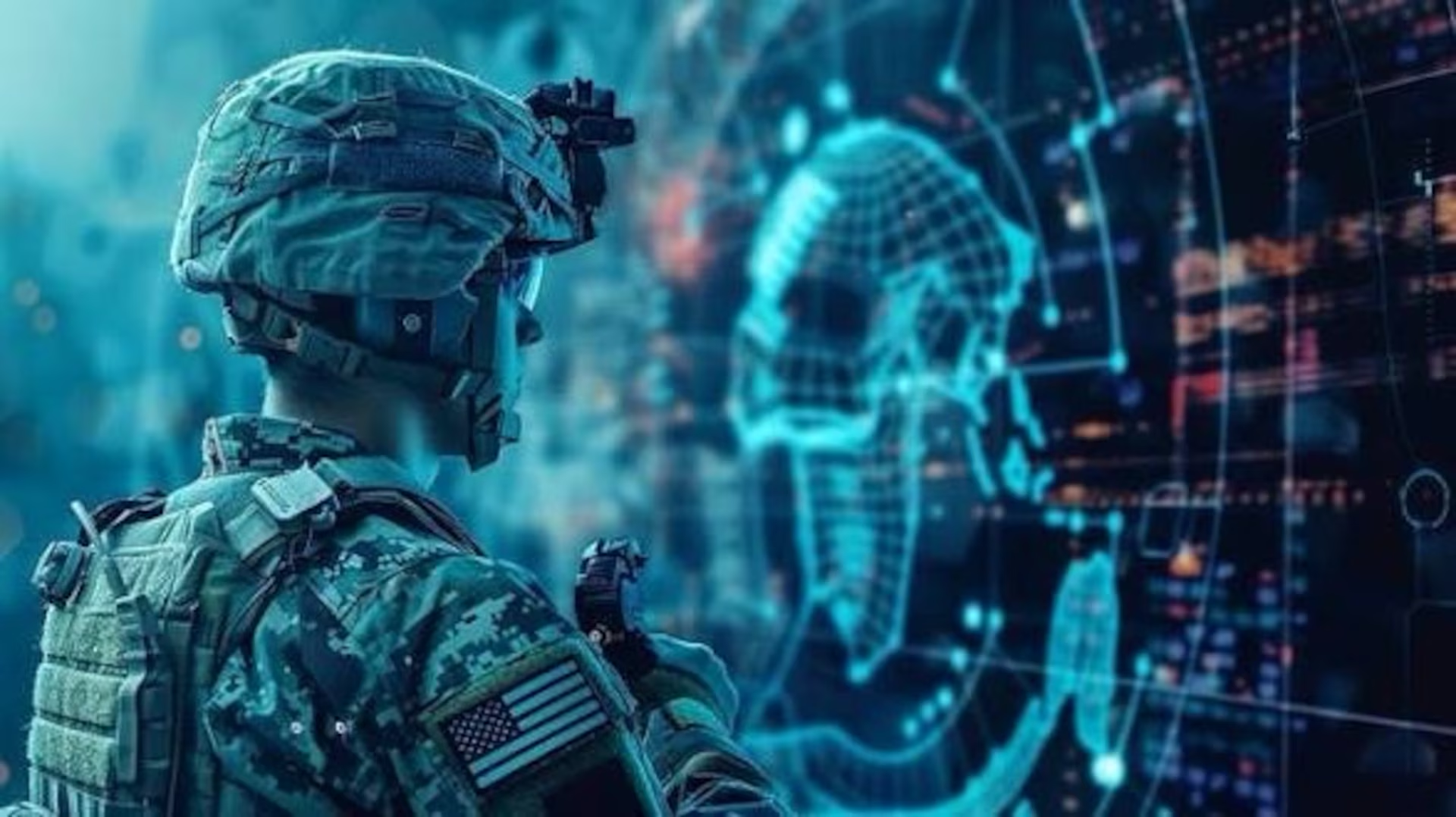
Artificial intelligence (AI) is rapidly reshaping how wars are fought. Militaries worldwide are moving beyond traditional weapons like fighter jets, tanks, and warships, placing software, data, and AI-driven systems at the center of operations.
By processing information faster and coordinating forces more efficiently, AI allows militaries to respond to threats quickly and operate drones and sensors with minimal direct human control. In practice, the side that understands the battlefield faster and makes decisions more quickly gains a critical advantage.
How AI is Changing the Battlefield
AI’s most visible application is in drones and loitering munitions. These systems use computer vision to identify targets and navigate even when GPS or communications are disrupted. While this enables operations in contested environments, it also raises ethical concerns: relying on AI to select targets could lead to mistakes or unintended civilian casualties if the algorithms misinterpret data. Militaries emphasize human oversight, but the speed and complexity of AI-driven operations make ensuring accountability challenging.
Intelligence analysis is another key area. Modern militaries collect massive amounts of data from satellites, radar, and surveillance drones. AI can process these datasets far faster than human analysts, detecting unusual activity or potential threats. NATO refers to this process as joint Intelligence, Surveillance, and Reconnaissance (ISR). Yet, the ethical responsibility for interpreting AI-generated intelligence ultimately rests with humans, who must prevent errors from translating into real-world harm.
Commanders are also using AI to create a shared “Common Operating Picture,” integrating sensor data into a real-time map of friendly forces, threats, and ongoing operations. Faster information flow shortens the military “kill chain,” the time between detecting a threat and taking action. While efficiency is critical, it also increases pressure to make rapid targeting decisions, highlighting the need for strict ethical guidelines.
Autonomous systems, including uncrewed vehicles in the air, sea, and underwater, may operate in swarms to monitor large areas or overwhelm defenses. While these systems reduce risk to personnel, they pose ethical and legal questions about accountability in combat, particularly when decisions are partly made by algorithms rather than humans.
AI is increasingly used in cyber defense and electronic warfare to detect hacking attempts, monitor unusual network activity, and manage radar and communication signals. However, these systems themselves are vulnerable, making cybersecurity and operational integrity both a technical and ethical priority.
The Companies Driving Military AI
The firms developing these technologies fall into three categories:
- New defense tech companies such as Anduril, Palantir, Helsing, and Shield AI focus on software, data analysis, and autonomous drones, often moving faster than traditional contractors.
- Established defense manufacturers like Lockheed Martin, BAE Systems, RTX (formerly Raytheon), and Northrop Grumman integrate AI into aircraft, missiles, ships, and radar systems to operate within modern command networks.
- Commercial AI developers also play an indirect role, as civilian AI models can be adapted for military analysis, creating “dual-use” technologies that require careful oversight to prevent unintended consequences.
Governance and Supply Chain Challenges
Governments are establishing safeguards to ensure humans remain responsible for critical decisions, particularly those involving lethal force. Supply-chain risks are also significant; reliance on a single AI provider could disrupt operations if contracts, regulations, or political conditions change. Maintaining both ethical oversight and operational continuity is now a key focus for defense planners.
Strategic Competition: China vs. the West
China and the West Much of the global discussion around military AI focuses on competition between China and Western countries. The United States and its allies currently lead in advanced semiconductor technology, powerful computing systems, and cutting-edge AI models. They also have extensive experience integrating new technologies into real-world military operations. China, however, has a different advantage. Through a policy often described as “Military-Civil Fusion,” Chinese authorities encourage close cooperation between commercial technology companies and the military. This can help new technologies spread quickly into defense applications. As a result, the competition may not be about who invents the most advanced AI system first. Instead, it may depend on who can deploy and scale these technologies across their military forces more quickly.