


Advertisementspot_img

U.S. sub sinks Iranian warship off Sri Lanka, at least 80 dead

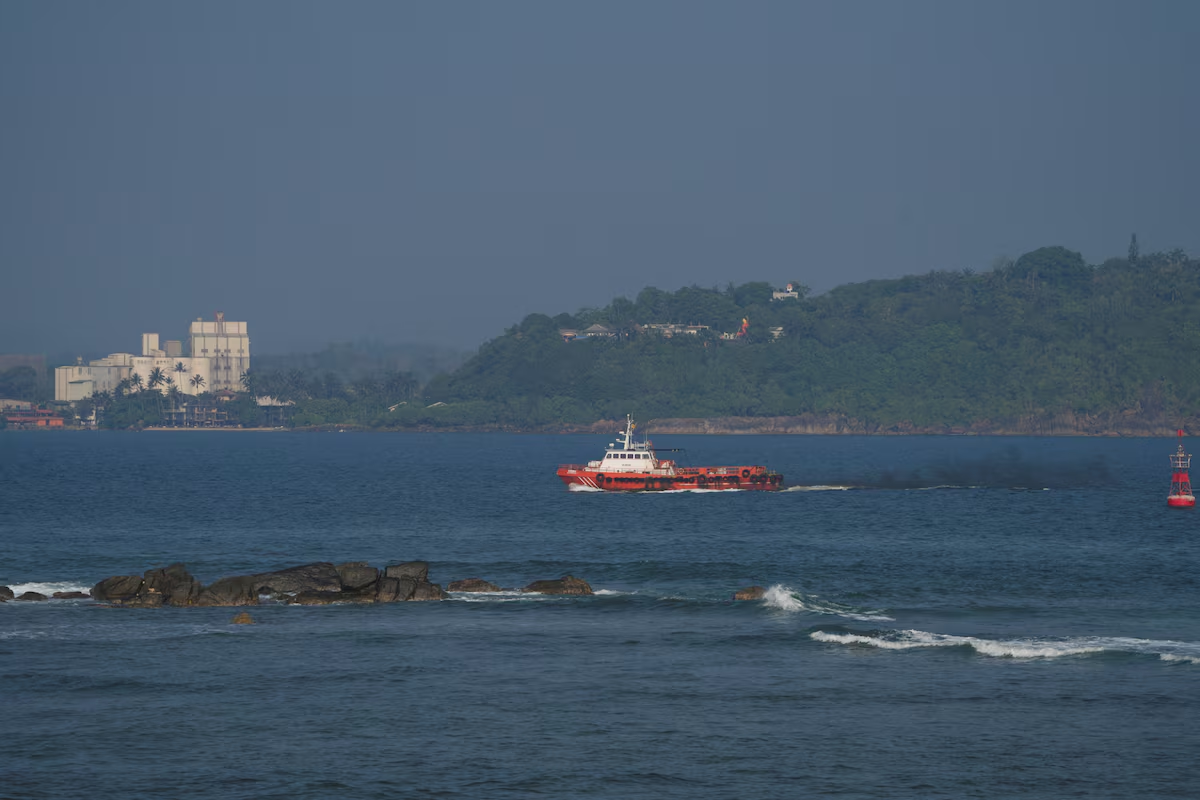
An Iranian naval vessel has sunk in international waters off Sri Lanka’s southern coast after what U.S. and Sri Lankan officials described as an attack by a U.S. submarine, in a sharp escalation of the widening U.S.–Iran conflict. Reuters reported Sri Lanka rescued 32 people and that officials said at least 80 were dead from a reported crew of about 180 aboard the warship identified as IRIS Dena.

Sri Lankan authorities said they received a distress signal and launched a search-and-rescue operation, later recovering survivors and bodies while observing a large oil slick and debris field, indicating the vessel had sunk before rescuers reached the scene. The Associated Press similarly reported that Sri Lanka recovered dozens of bodies and rescued survivors after the warship sank, framing the incident as one of the rare submarine-on-ship combat engagements in modern times.

U.S. Defence Secretary Pete Hegseth confirmed the sinking in public remarks cited by multiple outlets, including The Guardian, which reported he said the ship was “sunk by a torpedo,” describing it as an action in international waters.

What is known about the ship and the incident

Reuters identified the ship as IRIS Dena, and reported it had recently participated in India’s multilateral naval exercise “Milan” in the Bay of Bengal, a detail that places the vessel’s recent operations in the wider Indian Ocean theatre rather than the Gulf itself.

U.S. Naval Institute News reported the vessel was a Moudge-class frigate and said the U.S. statement presented the sinking as deliberate, with Hegseth describing a submarine-launched torpedo strike.

What remains unclear, and why that matters

Even with confirmation that the ship was sunk, key operational details remain limited in publicly reported accounts, including the precise location, the immediate tactical circumstances, and whether other vessels or aircraft were involved in tracking or targeting. Those specifics matter because the Indian Ocean is a major corridor for commercial shipping between the Middle East, South Asia, and East Asia, and any perception of spillover combat risk, even far from the Strait of Hormuz, can rapidly affect routing decisions and insurance pricing.

Why this matters for shipping, and for island economies

The sinking is occurring against a backdrop of growing maritime risk in the broader region, including security advisories warning of heightened threats and electronic interference in nearby theatres. For commercial shipping, the main transmission mechanisms are not only physical danger but also war risk insurance availability, premiums, and the operating restrictions that follow. When insurers reprice or withdraw cover, shipowners and liner operators often suspend sailings, reroute, or impose emergency surcharges, increasing freight costs and reducing schedule reliability.

For import-dependent Small Island Developing States, including the Maldives, the first impacts typically show up as higher landed costs for fuel and essential goods, followed by delays if shipping networks reconfigure or if transshipment hubs become congested. UNCTAD has repeatedly noted that SIDS face structurally higher transport and insurance costs relative to import value, making them more sensitive to shocks in maritime risk and freight pricing.

Developing story note

This remains a fast-moving situation. As official statements, casualty figures, and maritime security assessments update, editorial best practice is to clearly timestamp updates and attribute any operational claims, such as the weapon type used or the precise location, to named official sources or major wire services.

- Advertisement -spot_img

An Iranian naval vessel has sunk in international waters off Sri Lanka’s southern coast after what U.S. and Sri Lankan officials described as an attack by a U.S. submarine, in a sharp escalation of the widening U.S.–Iran conflict. Reuters reported Sri Lanka rescued 32 people and that officials said at least 80 were dead from a reported crew of about 180 aboard the warship identified as IRIS Dena.

Sri Lankan authorities said they received a distress signal and launched a search-and-rescue operation, later recovering survivors and bodies while observing a large oil slick and debris field, indicating the vessel had sunk before rescuers reached the scene. The Associated Press similarly reported that Sri Lanka recovered dozens of bodies and rescued survivors after the warship sank, framing the incident as one of the rare submarine-on-ship combat engagements in modern times.

U.S. Defence Secretary Pete Hegseth confirmed the sinking in public remarks cited by multiple outlets, including The Guardian, which reported he said the ship was “sunk by a torpedo,” describing it as an action in international waters.

What is known about the ship and the incident

Reuters identified the ship as IRIS Dena, and reported it had recently participated in India’s multilateral naval exercise “Milan” in the Bay of Bengal, a detail that places the vessel’s recent operations in the wider Indian Ocean theatre rather than the Gulf itself.

U.S. Naval Institute News reported the vessel was a Moudge-class frigate and said the U.S. statement presented the sinking as deliberate, with Hegseth describing a submarine-launched torpedo strike.

What remains unclear, and why that matters

Even with confirmation that the ship was sunk, key operational details remain limited in publicly reported accounts, including the precise location, the immediate tactical circumstances, and whether other vessels or aircraft were involved in tracking or targeting. Those specifics matter because the Indian Ocean is a major corridor for commercial shipping between the Middle East, South Asia, and East Asia, and any perception of spillover combat risk, even far from the Strait of Hormuz, can rapidly affect routing decisions and insurance pricing.

Why this matters for shipping, and for island economies

The sinking is occurring against a backdrop of growing maritime risk in the broader region, including security advisories warning of heightened threats and electronic interference in nearby theatres. For commercial shipping, the main transmission mechanisms are not only physical danger but also war risk insurance availability, premiums, and the operating restrictions that follow. When insurers reprice or withdraw cover, shipowners and liner operators often suspend sailings, reroute, or impose emergency surcharges, increasing freight costs and reducing schedule reliability.

For import-dependent Small Island Developing States, including the Maldives, the first impacts typically show up as higher landed costs for fuel and essential goods, followed by delays if shipping networks reconfigure or if transshipment hubs become congested. UNCTAD has repeatedly noted that SIDS face structurally higher transport and insurance costs relative to import value, making them more sensitive to shocks in maritime risk and freight pricing.

Developing story note

This remains a fast-moving situation. As official statements, casualty figures, and maritime security assessments update, editorial best practice is to clearly timestamp updates and attribute any operational claims, such as the weapon type used or the precise location, to named official sources or major wire services.

Advertisementspot_img

Related News