


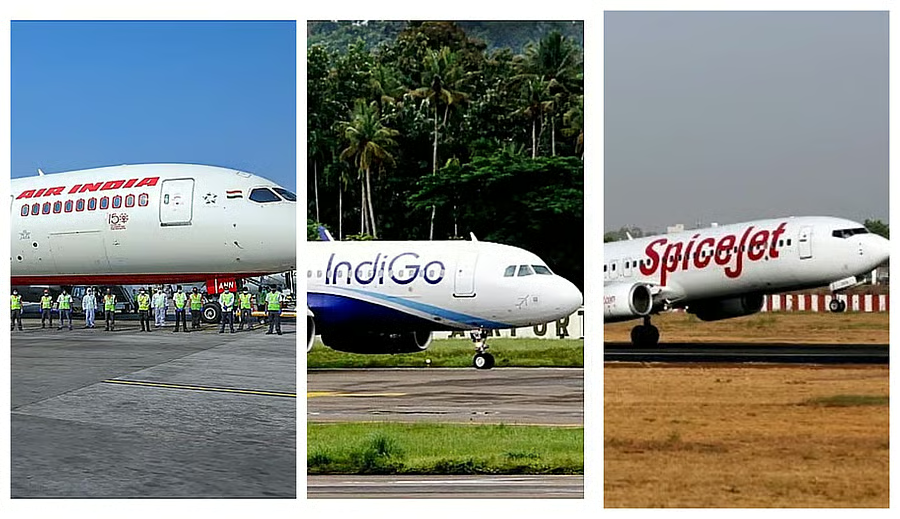
Three of India’s biggest airlines — Air India, IndiGo and SpiceJet — have issued a stark warning to the government in New Delhi: the aviation industry is on the verge of stopping operations entirely. The joint alert, reported by the Press Trust of India, comes as soaring fuel costs and restricted airspace squeeze carriers from multiple directions.
Together, the three carriers control roughly 95 percent of India’s aviation market — the world’s fifth largest. Their distress signal raises serious questions not just for Indian passengers, but for destinations like the Maldives that depend heavily on Indian visitors.
What is driving the crisis?
The ongoing conflict in the region and the near-complete closure of the Strait of Hormuz have pushed oil prices sharply upward. For airlines, this hits directly at Aviation Turbine Fuel (ATF), which makes up about 40 percent of a carrier’s total operating costs — a burden that has become increasingly unmanageable.
Airspace restrictions tied to the conflict have compounded the problem, forcing aircraft on long-haul routes to take longer detours, burning more fuel and increasing flight times. Airlines have urged the civil aviation ministry to revise ATF pricing mechanisms, and the Federation of Indian Airlines has called for the framework to be extended to cover both domestic and international operations.
Why the Maldives should be watching closely
India consistently ranks as one of the top source market for Maldives tourism, with hundreds of thousands of visitors arriving each year on direct routes operated by IndiGo, Air India and others. Any reduction in flight capacity or the suspension of routes would directly reduce tourist arrivals and revenue for resorts, guesthouses and the broader hospitality sector.
Higher airline operating costs typically translate into higher ticket prices for passengers. If fares on routes between Indian cities and Velana International Airport rise significantly, some travellers may choose closer or cheaper alternatives, redirecting leisure spending away from the Maldives.
Maldives Airports Company Limited and the tourism ministry have not yet commented on the situation publicly. Industry observers say it would be prudent to monitor developments closely and engage with airline partners to understand any planned changes to route operations.
India sent approximately 209,000 tourists to the Maldives in 2024, making it the country’s largest source market for the year. Direct air connectivity between the two countries is served by multiple daily flights from cities including Mumbai, Delhi, Chennai and Bengaluru.